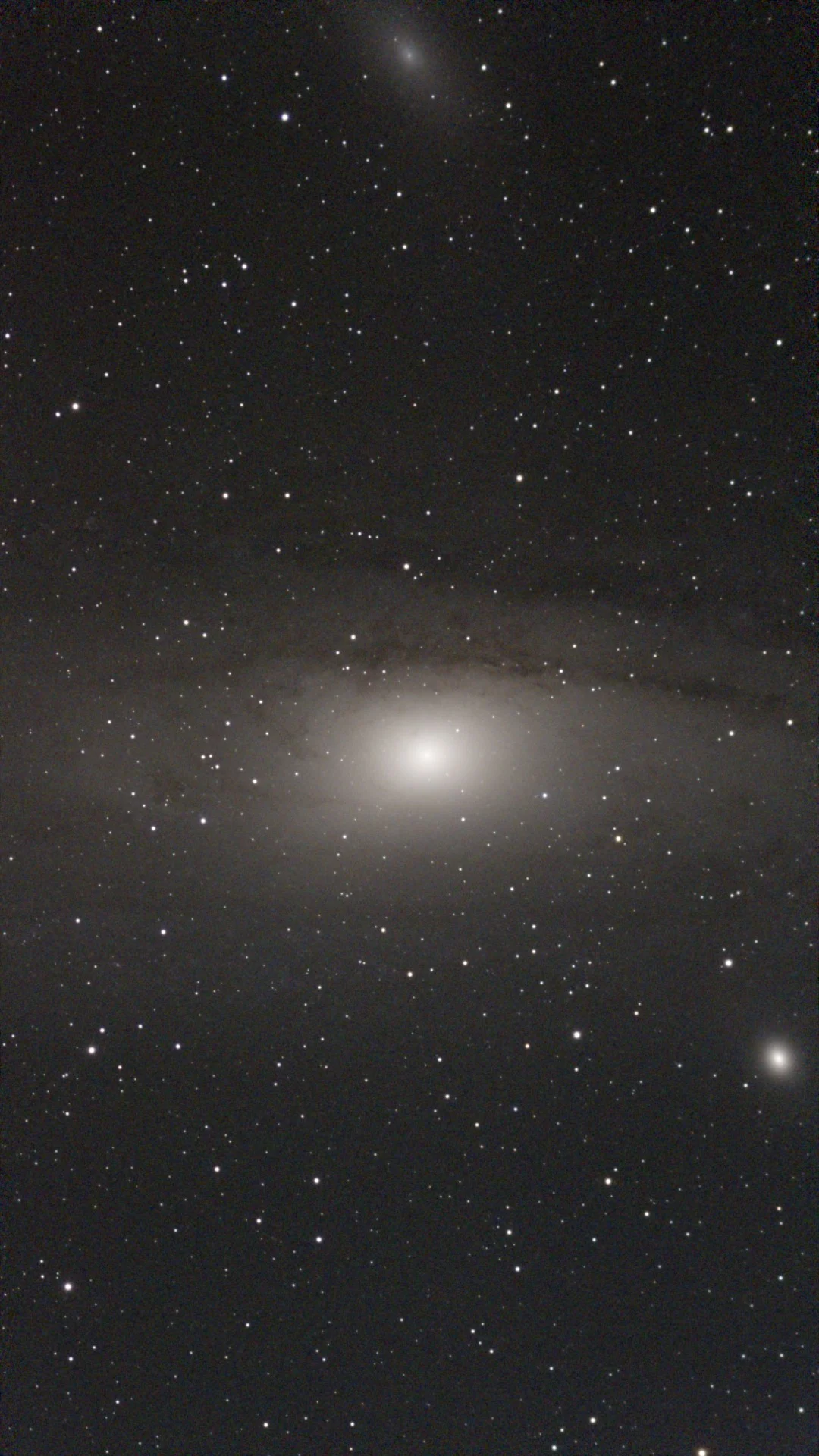
The light began its journey long before it reached the telescope in Malmö.
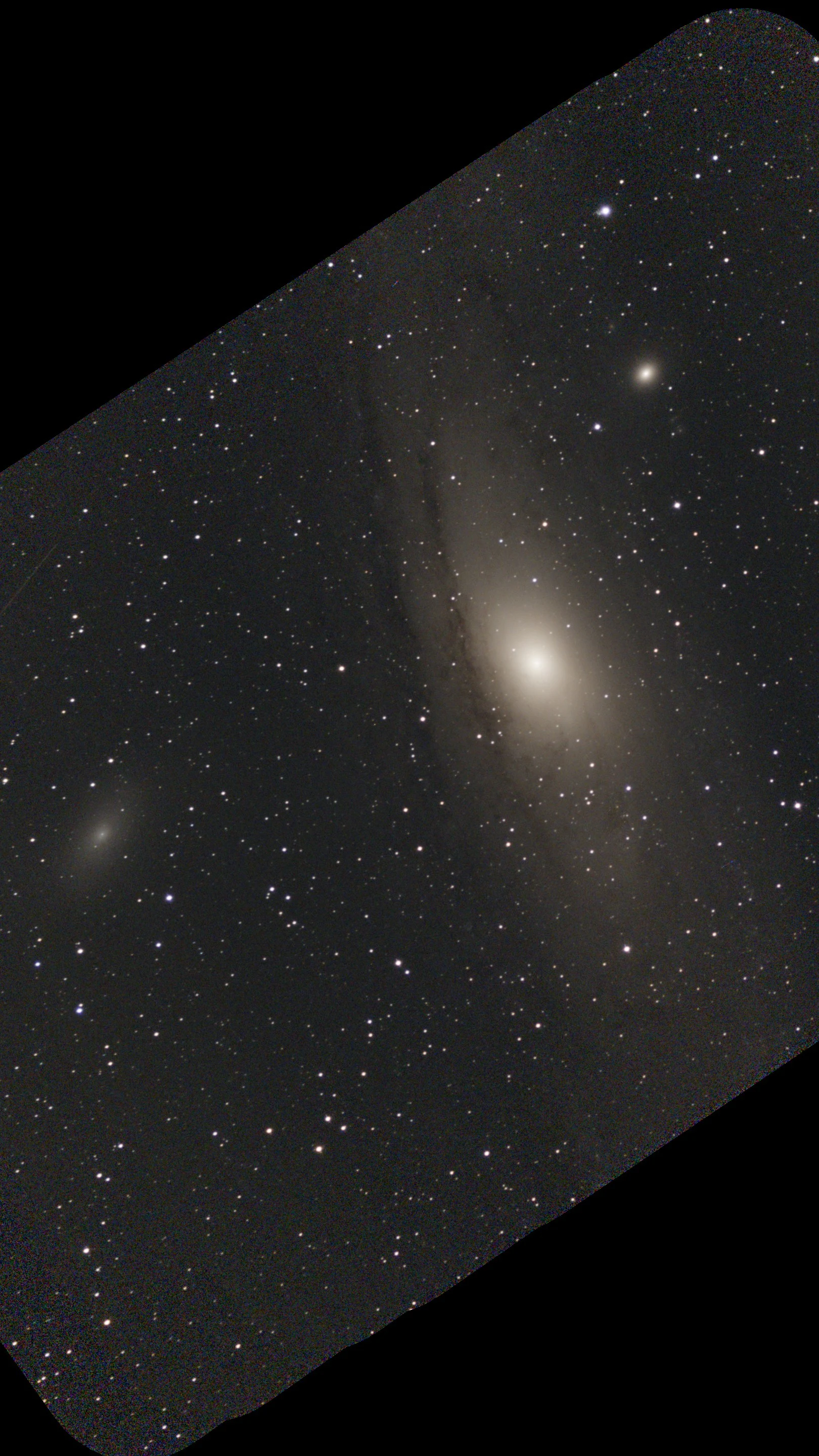
Every photograph began at the same point on Earth. Follow the telescope from Malmö, through the local night sky, to light that crossed thousands—or millions—of years to reach us.
The globe shows the real observing origin. The compass records where the telescope pointed. The route uses a logarithmic scale, because a linear one would crush every Milky Way target into a single pixel beside Andromeda.
Västra Hamnen, Sweden. All twelve targets were photographed here with a Seestar S50. Earth texture: NASA Blue Marble.
The light began its journey long before it reached the telescope in Malmö.
The edge is Malmö's horizon; the centre is directly overhead. Each marker uses the target's altitude and compass direction at its recorded capture time.
Equal spacing represents a tenfold increase. This keeps nearby nebulae readable while making the extraordinary leap from our galaxy to Andromeda truthful.
Sun-centred average orbital distance gives a stable scale from Mercury to Neptune. It is not the changing distance from Earth to each planet.
Planet spacing is logarithmic, just like the deep-space scale below. Light reaches Neptune's average orbit in about 4 hours 12 minutes; the nearest photograph below began its journey more than a millennium ago.
The marker shows how long the selected target's light travelled before arriving at the telescope—not how far the telescope itself travelled.